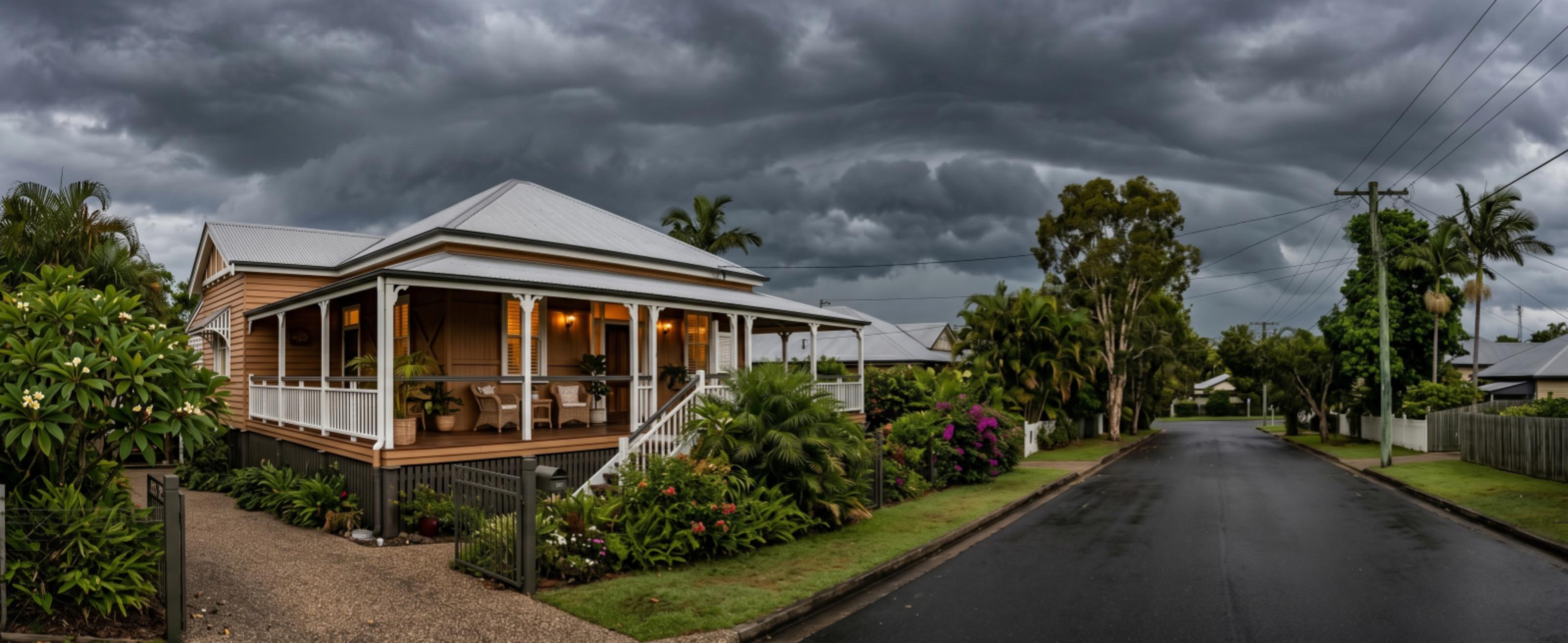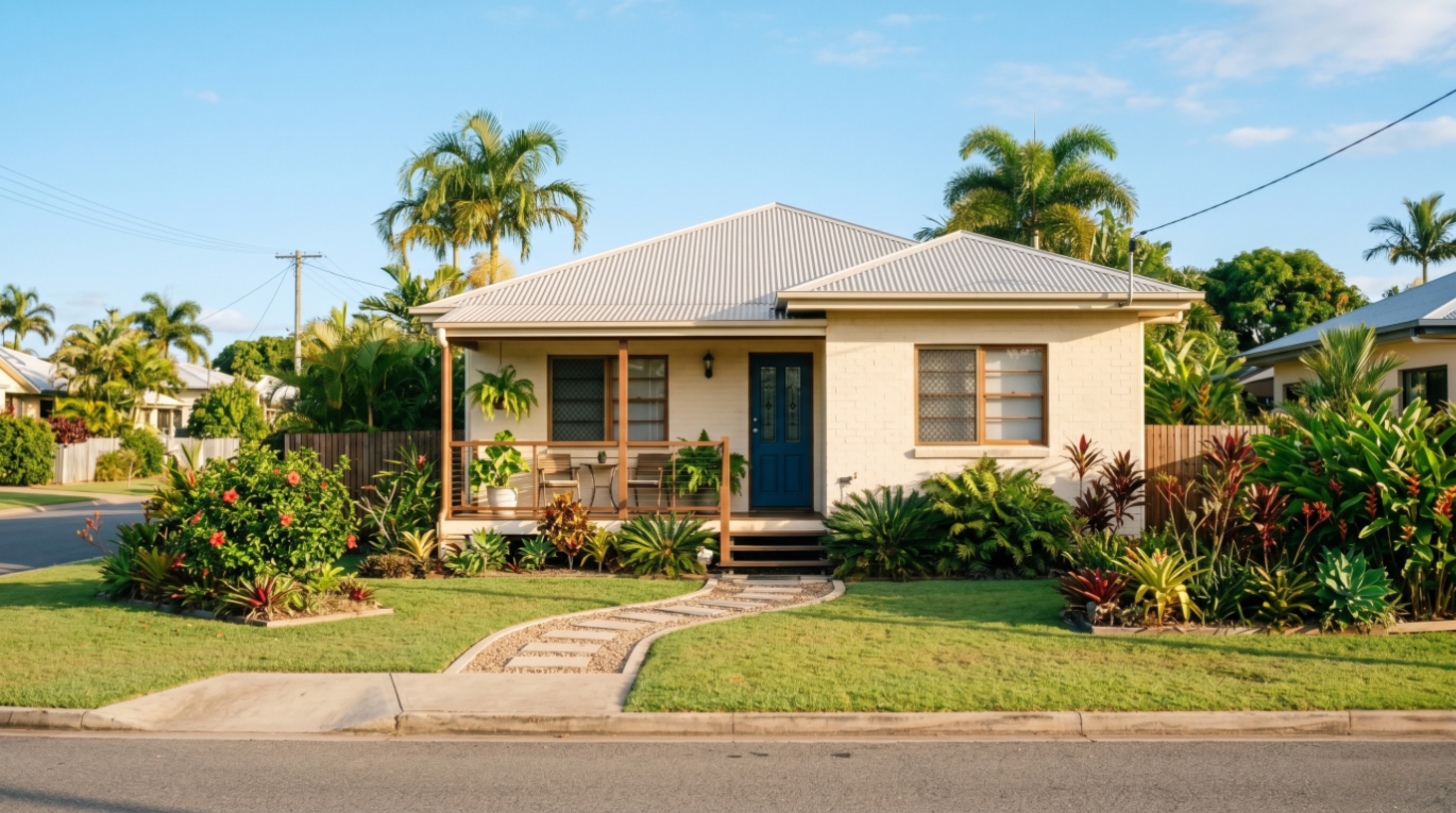
You've found the right house. The suburb is good, the price is reasonable, the school catchment works. Then you sit down with a lender — and suddenly you're being told your borrowing capacity is lower than you expected, your deposit might not be enough, and the postcode you've chosen is on a restricted list. Welcome to home lending in Townsville, where the rules are different from Brisbane and nobody warns you about it upfront.
Most Townsville buyers walk into the process with a capital-city mindset — 20% deposit, standard variable rate, done. What they don't know is that North Queensland lending comes with its own set of constraints: cyclone zone assessments, postcode restrictions, unit LVR caps, and lender appetite that shifts suburb by suburb. Get it wrong and you either pay significantly more than you needed to, or you miss out on the property entirely while your pre-approval lapses.
This guide covers everything a Townsville buyer actually needs to know — loan types, Queensland grants, what lenders are really looking at, and how to position your application so you're not starting from scratch three months in.
Why Townsville Lending Is Different — And Why It Catches Buyers Off Guard
The couple who put in their offer on a North Ward home in early 2024 had done everything right. Stable incomes, clean credit, six months of genuine savings. Their pre-approval from an online lender looked solid. Then the full application went in and the lender came back with a problem: the property's postcode was on their restricted list, and they'd only lend to 80% LVR on it. The buyers were $40,000 short of what they needed and had 14 days before their finance clause expired.
This isn't a rare story in Townsville. It happens because most buyers — and plenty of brokers who don't specialise in North Queensland — assume regional lending works the same way as capital city lending. It doesn't. The gap between what you think you can borrow and what a lender will actually approve on a specific Townsville property can be significant, and it usually only surfaces at the worst possible moment.
The real cost isn't just the stress. It's the building inspection you've paid for, the conveyancer you've engaged, the moving date you've mentally locked in. It's also the compounding effect of getting a loan structure wrong from day one — choosing the wrong rate type before a rate cut cycle, paying LMI you could have avoided, or missing a government grant worth $30,000 because nobody mentioned it applied to your situation.
In Townsville specifically, there are four factors that lenders assess differently to the way they'd assess the same deal in Brisbane or the Gold Coast:
- Cyclone zone exposure — Townsville sits in Cyclone Zone C/D, which affects insurance costs, building assessments, and some lenders' appetite for certain property types — particularly older timber homes.
- Postcode volatility — postcodes 4810, 4811 and 4812 have seen periods of price softness that make some lenders cautious about high LVR lending. The same property bought with a 90% loan in a capital city might only get 80% approval in these postcodes.
- Unit and strata restrictions — regional Queensland oversupply concerns mean lenders frequently cap units at 70–80% LVR regardless of your financial position.
- Employment profile — Townsville's economy runs on defence, mining services, healthcare and education. Permanent defence and health sector employees are viewed very favourably. FIFO workers and contractors need significantly more documentation to achieve the same result.
Understanding these four factors before you start looking — not after you've found the property — is the difference between a smooth purchase and a scramble.
How Home Loans Actually Work in Townsville — The Four Structures
Before looking at grants and borrowing capacity, it's worth understanding what you're actually choosing between. The loan structure you pick on day one affects your flexibility, your repayments, and your ability to respond to rate changes for the next 25–30 years. Most buyers choose without fully understanding the trade-offs.
Variable Rate Loans
The most common loan in Australia. Your rate moves with the lender's standard variable rate, which follows the Reserve Bank cash rate. Variable loans offer the most flexibility — extra repayments, redraw, offset accounts. In a falling rate environment (like the one Townsville buyers entered in 2024–2025) they're very attractive. The risk: if rates rise, your repayments go up with no warning period.
Fixed Rate Loans
You lock in a rate for 1 to 5 years. Repayments are predictable, which works well for first-home buyers on tight budgets. The cost: you usually can't make significant extra repayments without a break fee, and if rates fall you're stuck at the higher rate. Most fixed loans revert to the lender's (often higher) standard variable rate when the fixed period ends — something many buyers don't plan for.
Split Loans
Part fixed, part variable. You get repayment certainty on the fixed portion while keeping flexibility on the variable portion. Popular in Townsville with buyers who want to hedge — locking in part of the loan while keeping an offset account active on the rest.
Interest-Only Loans
Used almost exclusively by investors. You pay only interest for a set period — usually 1 to 5 years — keeping repayments low while the property (hopefully) appreciates. When the interest-only period ends, repayments jump as you begin paying down the principal. In regional Queensland, interest-only approval on investment properties has tightened significantly — some lenders now require higher deposits or income verification for IO loans in Townsville postcodes.
Townsville investor note: Interest-only loans on investment properties in regional QLD postcodes can be harder to get approved than in capital cities. Some lenders apply stricter income requirements or lower the maximum LVR. A local mortgage broker will know which lenders are currently accepting applications in your postcode.
How Much Can You Borrow?
Lenders calculate borrowing capacity based on your income, expenses, existing debts, and the loan's interest rate — plus a mandatory "serviceability buffer" (currently 3% above the actual rate, per APRA guidelines). This buffer means the rate used to assess your ability to repay is always higher than what you'll actually pay.
| Household Income (gross) | Approximate Borrowing Capacity* | Typical Townsville Budget |
|---|---|---|
| $70,000 | ~$340,000–$380,000 | Units, townhouses, entry-level houses |
| $100,000 | ~$480,000–$540,000 | Houses in Pimlico, Mundingburra, Aitkenvale |
| $140,000 | ~$650,000–$730,000 | Larger homes, Castle Hill surrounds, Kirwan |
| $200,000+ | $900,000+ | Premium suburbs, acreage, investment portfolio |
*Estimates only. Actual borrowing capacity depends on expenses, existing debts, credit history and individual lender policies.
The Queensland Grants Most Townsville Buyers Don't Fully Use
Queensland is one of the most generous states in the country for first-home buyers — but the grants are structured in ways that reward buyers who plan ahead and penalise those who find out too late. Here's what's currently available and what the real-world conditions look like.
First Home Owner Grant (FHOG)
Queensland offers a $30,000 First Home Owner Grant for eligible buyers purchasing or building a new home valued up to $750,000. This is one of the most generous FHOG amounts in the country. To qualify, you must be an Australian citizen or permanent resident, be buying your first home, and the property must be a new or substantially renovated dwelling. The grant does not apply to established homes.
First Home Guarantee (Federal)
Part of the federal government's Home Guarantee Scheme. Eligible first-home buyers can purchase with as little as a 5% deposit — with the government guaranteeing the remaining 15% — avoiding the need to pay Lenders Mortgage Insurance (LMI). There are income caps ($125,000 for individuals, $200,000 for couples) and property price caps that vary by location.
Queensland Transfer Duty Concessions
First-home buyers in Queensland can access a transfer duty (stamp duty) concession or exemption. For homes valued up to $500,000, first-home buyers pay no transfer duty. For homes between $500,000 and $550,000, a concession applies. This can save buyers up to $15,925 compared to standard transfer duty rates.
Grants stack with borrowing: A first-home buyer using the $30,000 FHOG, the First Home Guarantee, and the transfer duty concession could potentially enter the Townsville market with a significantly smaller cash outlay than they might expect. These schemes change regularly — check the Queensland Government's official website for current eligibility.
The Deposit Question — What You Actually Need in Townsville
The 20% deposit rule is real — but in Townsville, where median house prices in suburbs like Mundingburra, Pimlico and Kirwan sit well below Brisbane equivalents, it's more achievable than most buyers assume. The mistake is focusing only on the deposit and forgetting the costs on top.
- 5% deposit — possible with First Home Guarantee (no LMI if eligible); otherwise LMI applies and can add thousands to your loan costs.
- 10% deposit — LMI still applies, but lower than a 5% deposit loan. Some lenders have competitive LMI rates at 90% LVR.
- 20% deposit — no LMI required. Most flexible loan options available. Lenders compete harder for your business.
- Plus costs — budget an additional 3–5% of purchase price for conveyancing, building and pest inspections, loan establishment fees, and moving costs.
What Lenders Actually Look at When They Assess a Townsville Property
Your income and deposit get you through the first filter. The property itself is the second filter — and this is where Townsville buyers can get caught out if they've fallen in love with a home before checking what a lender will think of it.
Building Materials and Cyclone Resilience
Lenders (and their mortgage insurers) pay close attention to construction type in cyclone-prone regions. Brick or rendered masonry homes are viewed more favourably than older timber homes — particularly pre-1980s construction — in terms of insurance and resale risk. If you're buying an older Queenslander, factor in the cost of a building inspection and potentially a cyclone retrofit assessment.
Property Size and Land Area
Some lenders place restrictions on properties with very small land areas or unusual configurations. Rural or acreage properties on the outskirts of Townsville are assessed differently to standard residential blocks.
Units and High-Density Strata
Lenders often cap LVR at 80% (or even 70%) for units in regional Queensland — especially in complexes with a high investor-to-owner-occupier ratio. This means a larger deposit is required even if you're an owner-occupier buying in a complex that's predominantly investor-owned.
Should You Use a Mortgage Broker? In Townsville, Almost Always Yes
In a capital city with standard properties and vanilla employment, going directly to a bank can work fine. In Townsville, where postcode restrictions, cyclone assessments and employment type all affect which lender will actually approve your deal, a broker who specialises in regional Queensland lending is worth far more than their commission.
A good broker doesn't just find you a rate — they know which lenders are currently lending in your postcode, which ones will accept a split income from defence and a civilian partner, and which ones will look favourably on a 1980s Queenslander versus a newer brick build in Kirwan. That knowledge gap between a broker who knows Townsville and one who doesn't can be the difference between an approval in three weeks and a rejection that resets your timeline by three months.
Brokers are paid commission by the lender when your loan settles, so there's no direct cost to you. Look for someone accredited with the MFAA or FBAA and ask directly: how many Townsville purchases have you settled in the last 12 months? A good North Queensland broker will have a clear answer.
Getting Your Application Ready — A Townsville Buyer's Checklist
A complete application upfront is the single biggest factor in a fast approval. Lenders who receive everything they need on day one move faster and are less likely to come back with conditions that delay settlement. Get these together before you start making offers:
- Three to six months of bank statements (personal and any business accounts)
- Two most recent payslips, or two years' tax returns if self-employed
- Evidence of genuine savings (most lenders want 3–5% of the purchase price held in your account for at least 3 months)
- A copy of the contract of sale once you're under offer
- Building and pest inspection reports (strongly recommended in Townsville)
- Identification documents
- Statements for any existing loans, credit cards, or HECS-HELP debt
If you're buying as a FIFO worker or defence family, be prepared to provide additional employment documentation — contract letters, deployment schedules, or PAYG summaries — as lenders need to assess the consistency and continuity of your income carefully.
The Settlement Gap — Where Storage Fits In
One thing first-home buyers rarely plan for: the gap between selling your previous place and settling on the new one. Or arriving in Townsville from interstate before your settlement date. It happens more than you'd think, and cramming furniture into a short-term rental or a family member's garage is rarely the answer.
If you're relocating to Townsville from interstate and waiting on settlement, French Street Self Storage in Pimlico offers secure units from 18sqm to 30sqm on a minimum 3-month term — practical for bridging the gap without the stress of finding somewhere to put everything. It's also worth knowing for FIFO workers and defence families who need somewhere secure between postings or during the purchase process.
Frequently Asked Questions
How much deposit do I need to buy a home in Townsville?
Most lenders prefer a 20% deposit to avoid lenders mortgage insurance, but many accept 5% to 10% with LMI added. First home buyers in Queensland may also qualify for grants and low-deposit schemes that reduce the upfront amount needed.
Does Townsville's cyclone zone affect getting a home loan?
Indirectly, yes. Lenders require building insurance before settlement, and North Queensland premiums are higher because of cyclone risk. Getting an insurance quote early helps you budget your true borrowing capacity for a Townsville property.
Should I use a mortgage broker or go straight to a bank in Townsville?
A broker can compare products across many lenders and often understands North Queensland lending quirks, while going direct to your bank can be simpler if you have an existing relationship. Comparing both routes before committing usually gets the best result.
Is buying a home in Townsville cheaper than Brisbane?
Townsville's median house prices sit well below Brisbane's, which is a major drawcard for buyers. Offset that against higher insurance costs in the cyclone zone and weigh the total cost of ownership, not just the purchase price.
Need Storage While You Wait on Settlement?
French Street Self Storage has secure units in Pimlico available now. Enquire today — no waiting list, just a friendly response.
Enquire About Storage