You pack the spare room into a storage unit in November and don't think about it again until March. Then you roll up the door, and the smell gets you first — that sweet, musty smell — before you notice the grey bloom across the dining table and the spots on the lounge you were keeping for the new place. Townsville's wet season does this to furniture that's packed the wrong way, and it's almost always preventable.
This guide explains what the wet season actually does inside a storage unit in Townsville, using the Bureau of Meteorology's long-term climate figures, and sets out the steps that keep furniture, mattresses, electronics and paperwork dry from November through to April.
The short answer: clean and dry everything before it goes in, raise it off the concrete, cover it with breathable fabric rather than plastic, leave gaps for air, and add moisture absorbers. Then check the unit once a month through the wet season and after heavy rain. Townsville's morning humidity sits above the level most moulds need from January to March, so airflow and dryness matter more here than in most of Australia.
What Townsville's Wet Season Does to Stored Furniture
Townsville isn't wet all year — it's wet for a few months, and then very wet. On the Bureau of Meteorology's long-term averages for Townsville Airport, November to April brings about 1,043 mm of the city's 1,165 mm annual rainfall: roughly 90 percent of the year's rain in half the year. February alone averages 313 mm.
Humidity follows the same pattern, and that's the number that matters for stored furniture. Most moulds need relative humidity of about 70 percent or more to grow and spread, according to the Western Australian Museum's conservation guidance, which recommends keeping stored materials between 40 and 65 percent. Here's how Townsville compares:
| Month | Average rainfall | Average 9am humidity |
|---|---|---|
| September | 10 mm | 60% |
| October | 23 mm | 60% |
| November | 61 mm | 63% |
| December | 130 mm | 66% |
| January | 274 mm | 71% |
| February | 313 mm | 75% |
| March | 198 mm | 71% |
| April | 67 mm | 68% |
From January to March, the average morning humidity in Townsville sits above the 70 percent mark — and that's an average across decades, so plenty of individual days and nights run well higher. Inside a closed storage unit, a dining table, a mattress or a box of photos spends twelve weeks or more in conditions mould is very comfortable in.
The damage isn't only mould. Timber swells, so drawers stick and veneers lift. Leather develops white or green spots. Upholstery and mattresses pick up a mildew smell that's very hard to shift. Metal tools and bike chains rust, books and paperwork get spotted and wavy, and electronics can corrode at the contacts. None of it shows up in December. It shows up in March, when you open the door.
(Climate figures: Bureau of Meteorology, Townsville Aero station 032040, long-term monthly averages; humidity averages cover 1940–2010.)
Why Furniture Goes Mouldy in Storage in Townsville
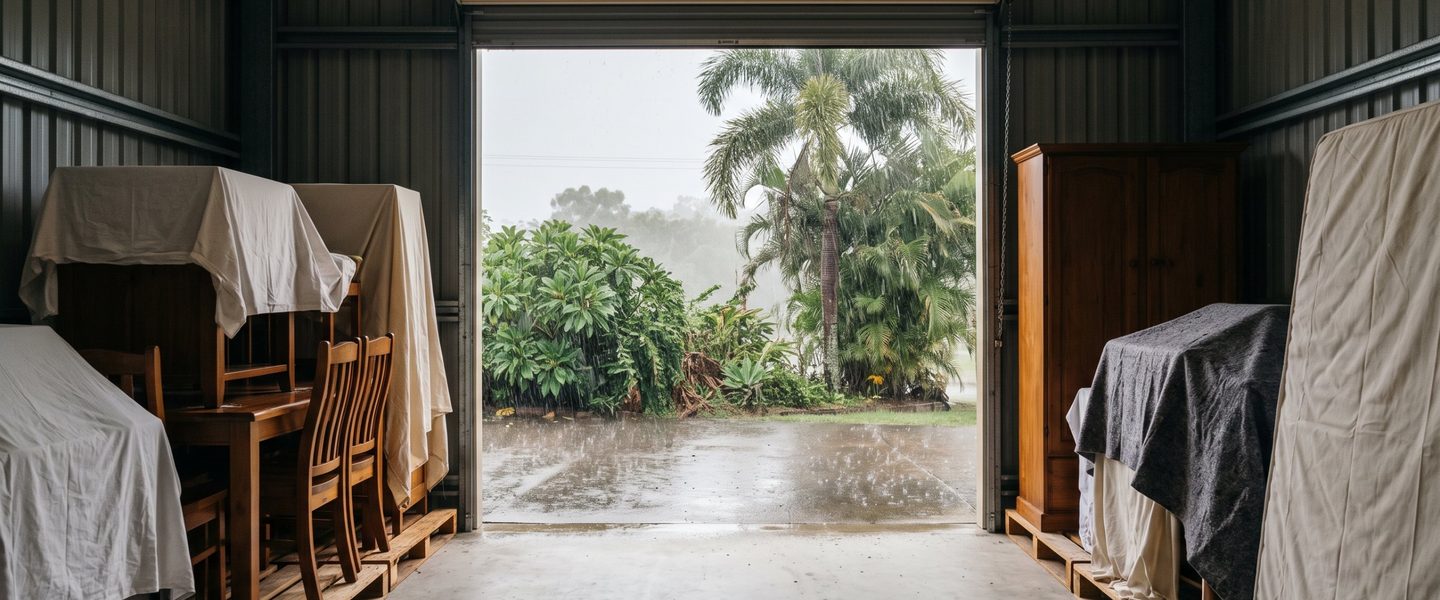
Most drive-up storage units — the steel-shed, roller-door kind common across Townsville — are dry and secure, but they aren't air-conditioned. That's fine for most goods, as long as you understand how moisture gets to them. There are four main routes.
Moisture you bring in with you. This is the biggest one. A fridge that's been wiped out but not left to dry, a lounge that sat on a verandah during a storm, a mattress moved on a humid afternoon, boxes packed straight after a rain shower — all of it carries water into the unit, where it has nowhere to go.
Condensation. Steel heats up quickly in the day and cools quickly at night. Warm, humid air that gets into the unit can condense on cooler surfaces overnight, particularly anything wrapped in plastic, where the moisture is trapped against the item.
The floor. Concrete slabs can draw a little moisture up from the ground, and anything sitting directly on the slab — a mattress base, a cardboard box, the feet of a timber wardrobe — is the first thing to feel it.
No airflow. A unit packed wall to wall and floor to ceiling has pockets of still air where humidity builds up. Mould grows fastest where air doesn't move: behind a wardrobe pushed flush against the wall, inside a cupboard with its doors shut, or under a plastic sheet.
The good news is that every one of these can be managed with how you pack. You don't need special equipment — you need the furniture to go in dry, and the air to be able to move around it.
How to Store Furniture Through the Wet Season — Step by Step
- Pack in the dry months if you can. September and October are Townsville's driest and least humid months, averaging 60 percent morning humidity and under 25 mm of rain. Furniture that goes in during October goes in dry. If you're moving in the wet, pick a dry day and don't load anything that's been rained on.
- Clean and dry everything first. Wipe down timber and vinyl, vacuum upholstery, and make sure fabrics are completely dry. Defrost and dry fridges and freezers for at least a day, then wedge the doors slightly open in storage so air can circulate.
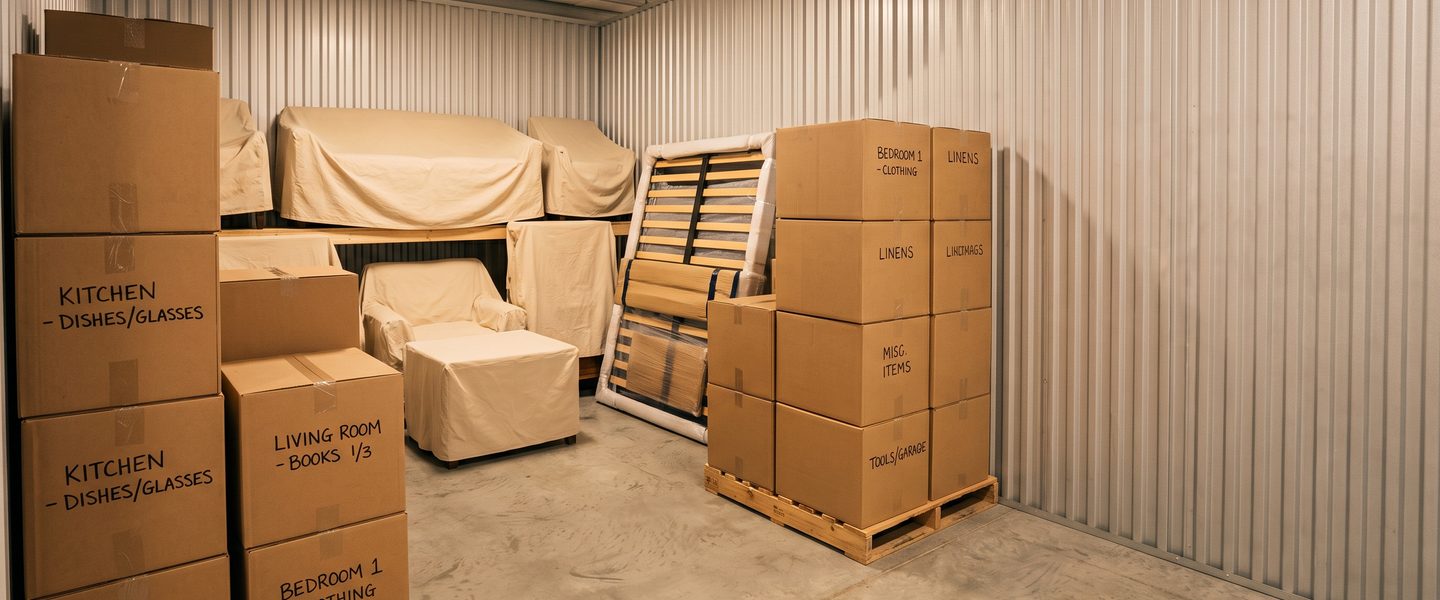
- Get it off the concrete. Stand furniture and boxes on timber pallets or battens so nothing sits directly on the slab. Mattresses should never lie flat on the floor.
- Use breathable covers, not plastic. Old cotton sheets, drop cloths and moving blankets keep dust off while letting moisture escape. Save plastic for short moves, or for sealed tubs of small items that are completely dry.
- Leave gaps for air. Keep furniture a hand's width off the walls and leave a walkway through the middle of the unit. Leave drawers and cupboard doors slightly open, and stack boxes in columns rather than one solid block.
- Add moisture absorbers. Calcium chloride absorbers, sold at hardware and supermarket stores, pull water out of the air into a tub. Put two or three in a garage-sized unit, and small silica gel sachets in boxes of electronics, documents or photos.
- Check the unit monthly from December to March. And after any heavy rain or a cyclone. Open up on a dry day, sniff for mustiness, look for damp patches and empty or replace the absorbers.
If you're still working out how much space you need — and how much room to leave for airflow — our storage size guide covers what fits in each unit size, and our guide to packing a storage unit properly goes through stacking and labelling in more detail.
Item by item
| Item | Wet-season risk | What to do |
|---|---|---|
| Timber furniture | Mould bloom, swelling, lifting veneer | Clean and dry, cover with cotton, keep off walls, open drawers slightly |
| Leather | White or green mould spots | Clean and condition before storing, cover loosely with cotton, never plastic |
| Mattresses and upholstery | Mildew smell, spotting | Breathable mattress bag, stand on its side on a pallet, never flat on the floor |
| Fridges and washing machines | Mould inside, smells | Defrost and dry for a day, doors wedged open, hoses drained |
| Electronics | Corrosion at contacts | Original boxes or sealed tubs with silica gel, off the floor |
| Books, papers and photos | Spotting, warping, mould | Sealed plastic tubs with silica gel, not cardboard on the floor |
| Tools and metal | Rust | Light coat of oil or rust inhibitor, store in closed toolboxes |
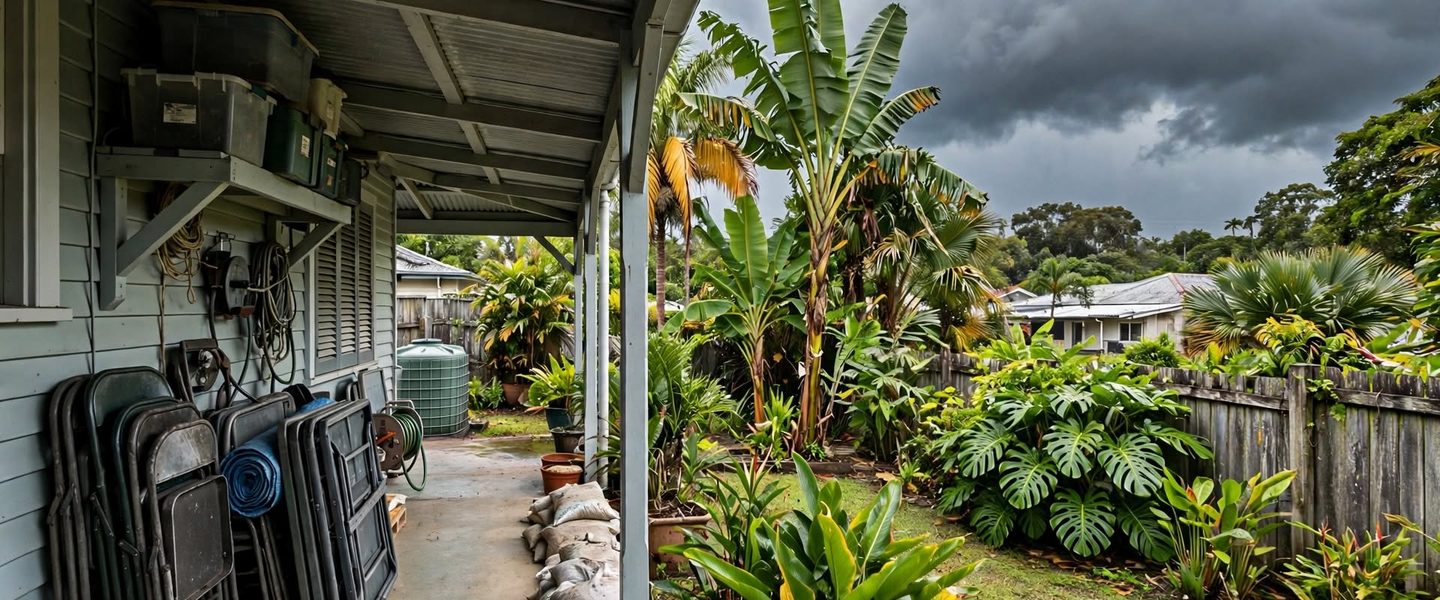
Cyclone season overlaps the wet. The steps above also make your unit easier to check after a storm. If you're clearing the yard and garage before 1 November, our cyclone season storage checklist covers what to store and secure first.
If You Find Mould
Don't panic, and don't just close the door again. Take the affected item out on a dry, sunny day — sunlight and moving air are your best tools. Wear gloves and a P2 mask, and brush or vacuum loose mould outdoors so you don't spread spores through the rest of the unit. On hard surfaces, wipe with a cloth and a mild detergent solution, then let the item dry completely before it goes back in. Treat the cause too: find out why that spot got damp, whether it's an item touching the wall, something sitting on the slab, or plastic that trapped moisture.
For valuable or sentimental pieces — antiques, artwork, a piano, family photos — or anything with mould through the fabric or deep in the timber, it's worth getting professional advice rather than scrubbing harder. And if anything was damaged by a storm or flood, contact your insurer before you clean up or throw anything out.
Do You Need Climate-Controlled Storage?
For most household furniture, no. Clean, dry furniture, packed with airflow and checked monthly, comes through a Townsville wet season without trouble in an ordinary drive-up unit. Climate-controlled storage, where it's available, is worth considering for high-value or sensitive items: antiques, fine timber pieces, artwork, pianos and other instruments, important documents and photo collections. For small quantities of those, keeping them at home in an air-conditioned room is often the simplest answer.
The same applies if you're away for a long stretch — a FIFO roster, a defence posting or a long trip — and can't check the unit yourself. Pack extra carefully, use more absorbers, and ask someone you trust to look in once a month. Our guide to long-term storage for FIFO workers and defence families covers the rest.
French Street Self Storage in Pimlico is drive-up, garage-style storage, so everything in this guide applies to our units too. All of our units are currently leased — check our storage page for future availability.
Frequently Asked Questions
When is the wet season in Townsville?
Townsville's wet season runs roughly from November or December to March or April. On Bureau of Meteorology long-term averages, November to April brings about 90 percent of the city's annual rainfall, and February is the wettest and most humid month, with an average 9am relative humidity of 75 percent.
Will my furniture go mouldy in a storage unit in Townsville?
It can if it's packed damp, wrapped in plastic or pushed hard against the walls. Most moulds need relative humidity of about 70 percent or more, and Townsville's average 9am humidity is above that from January to March. Clean, dry furniture with airflow, raised off the floor and checked monthly usually comes through the wet season fine.
Should I wrap furniture in plastic for storage?
Not for long-term storage through the wet season. Plastic traps any moisture already in the item and can cause condensation as temperatures change overnight. Use breathable covers such as old cotton sheets or moving blankets instead, and keep plastic for short moves or for sealed tubs of small, completely dry items.
Do moisture absorbers work in a storage unit?
They help. Calcium chloride moisture absorbers pull water out of the air and collect it in a tub, and over a Townsville wet season they can fill quickly. Put two or three in a garage-sized unit, check them monthly and replace them when full. They work best alongside airflow gaps, not instead of them.
How often should I check my storage unit during the wet season?
Once a month from December to March, and after any heavy rain or a cyclone. Open the door on a dry day, check for musty smells, damp patches on the floor and any mould on timber or fabric, and empty or replace moisture absorbers. Catching a problem early is far easier than cleaning it up later.
Storing Through the Wet?
All units at French Street Self Storage in Pimlico are currently leased. Get in touch to ask about future availability, or call (07) 4356 8367.
Contact Us